
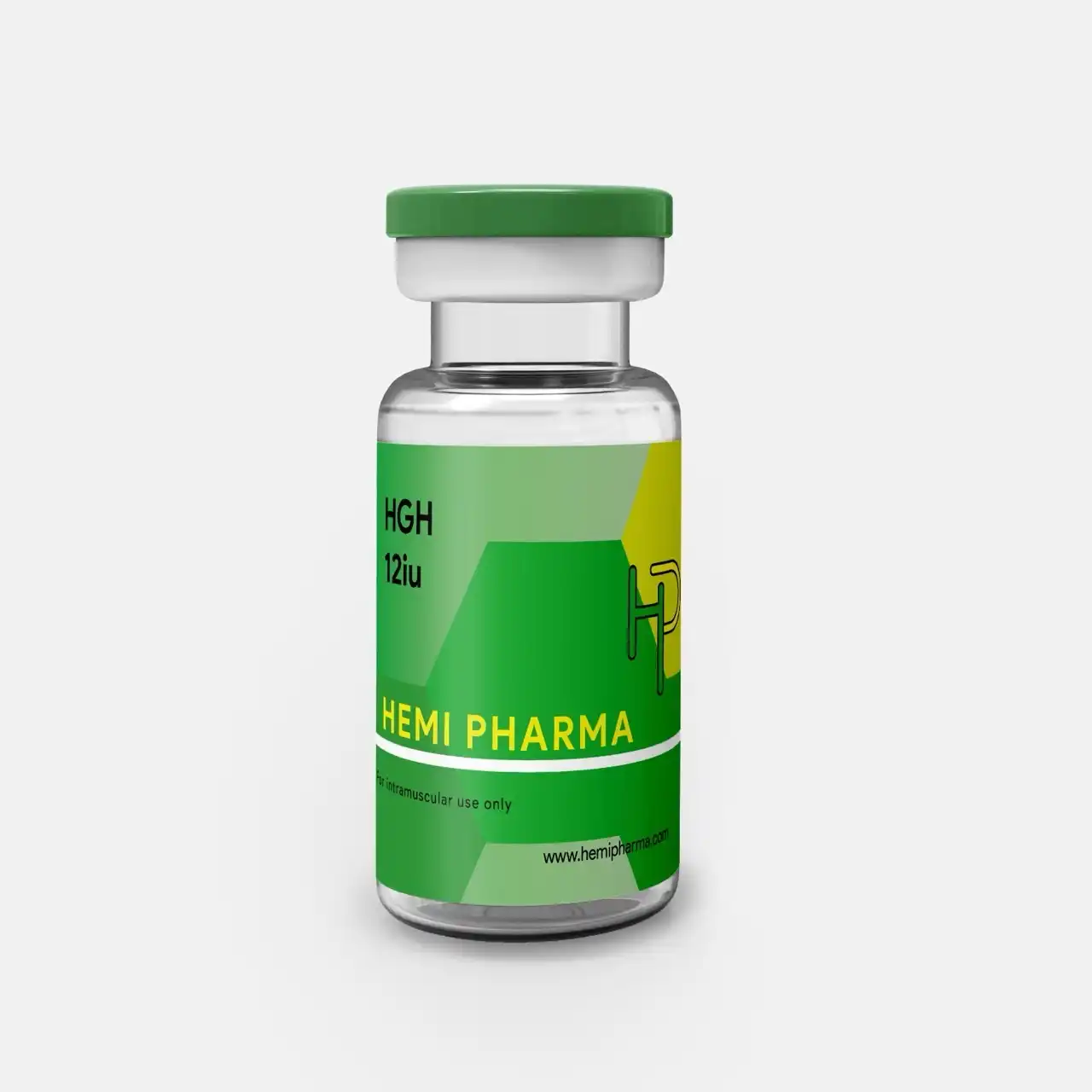
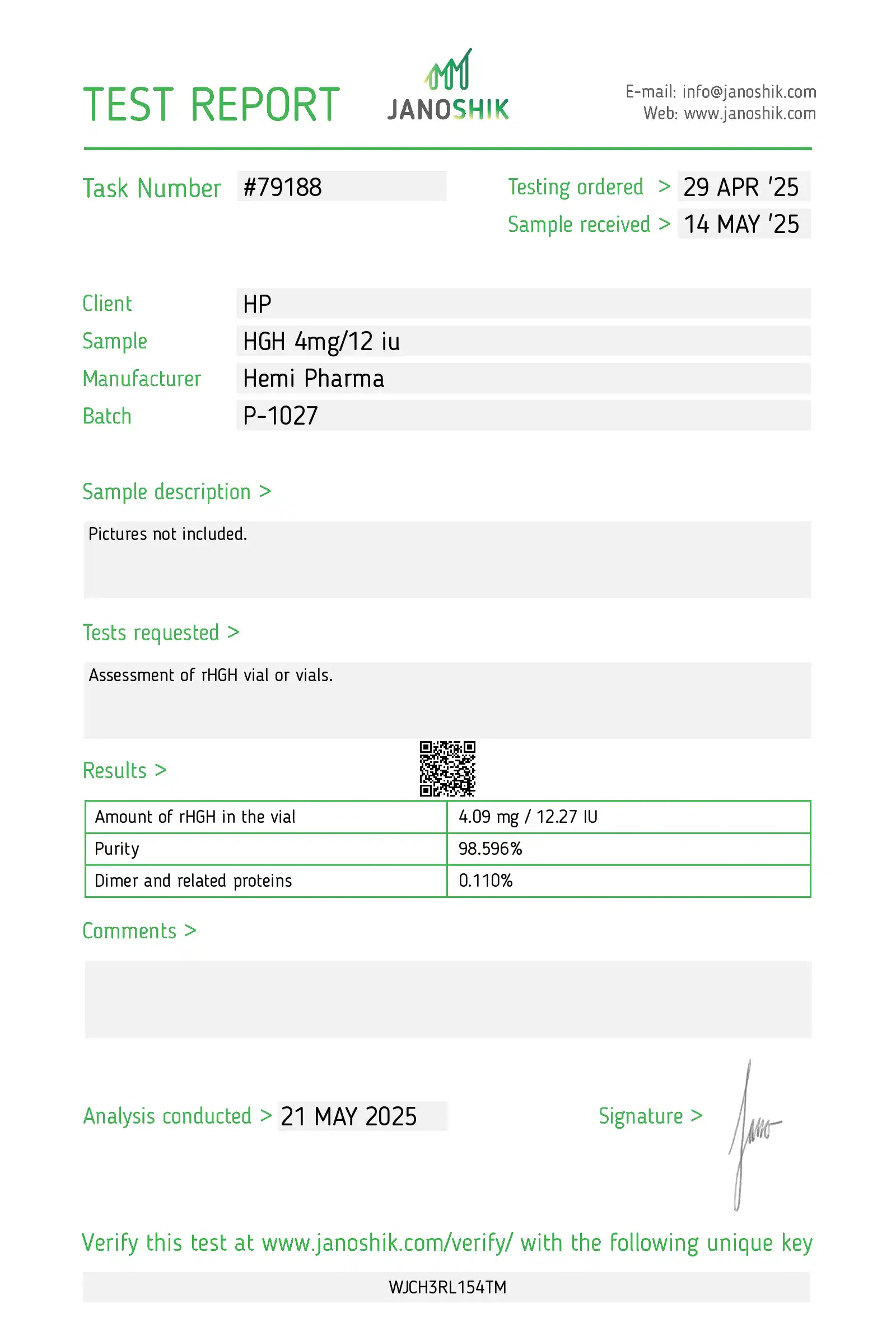
Hemi Pharma HGH
Hemi Pharma HGH is intended for research and laboratory studies, produced under controlled conditions with a focus on purity and formulation reliability.
$20.00 $25.00
HGH (Human Growth Hormone): What It Is and Why It Matters
Human Growth Hormone (HGH) is a natural hormone made by the pituitary gland. Your body releases HGH in pulses, mostly during sleep. HGH supports growth in children and helps regulate key functions in adults. It influences muscle, bone density, recovery, and metabolism.
Many people search for “HGH” when they want to understand energy, performance, and aging. Others search because a doctor discussed hormone testing. Whatever the reason, it helps to start with facts. HGH works in a complex system with other hormones. It also triggers the release of IGF-1 in the liver and tissues.
Hemi Pharma publishes educational content to help readers understand HGH basics. This page explains how HGH works and when medical guidance matters.
What HGH Does in the Body
HGH supports growth and repair across many tissues. It does not “work like a stimulant.” It works through signaling and long-term regulation. The effects can vary by age, sleep quality, nutrition, and training load.
HGH plays roles in:
-
Supporting normal growth and development in childhood
-
Maintaining bone remodeling and tissue repair
-
Influencing body composition over time
-
Supporting recovery processes after stress
-
Regulating parts of carbohydrate and fat metabolism
HGH also interacts with insulin, thyroid hormones, and sex hormones. That interaction can change how someone feels day to day. It can also change lab markers like glucose and IGF-1.
Human Growth Hormone in Medicine
Doctors may prescribe Human Growth Hormone for specific conditions. These decisions depend on labs, symptoms, and medical history. HGH therapy is not the same as general wellness supplements. It requires monitoring and follow-up.
Common Medical Contexts for HGH Discussion
A clinician may evaluate HGH when symptoms match hormone imbalance. They may use IGF-1 testing and stimulation tests. They may also check thyroid and cortisol status. That step helps avoid false conclusions.
HGH may come up in contexts like:
-
Diagnosed growth hormone deficiency
-
Certain growth disorders in children
-
Specific syndromes that affect growth or metabolism
-
Medical weight and body composition concerns under care
Only a licensed clinician can confirm diagnosis and treatment needs. Self-treatment carries real risks.
Safety, Risks, and Responsible Use
HGH can cause side effects, especially with improper use. Risks rise when someone uses HGH without medical supervision. Monitoring helps manage safety, dosing accuracy, and lab trends.
Possible concerns include:
-
Swelling or fluid retention
-
Joint or muscle discomfort
-
Changes in blood sugar control
-
Carpal tunnel-like symptoms
-
Changes in blood pressure
If someone suspects hormone issues, testing is the safer first step. A clinician can interpret results and rule out other causes. Sleep loss, stress, and nutrition can mimic hormone symptoms.




There are no reviews yet.